Your Team Is Using AI. Are They Using It Well?
AI is already part of the working day.
It is in research notes, meeting summaries, first drafts, reporting, admin, content planning and client delivery. Some people are using it confidently. Some are testing it quietly when they get a spare ten minutes. Some are avoiding it because they are not sure what is allowed, what is useful, or what might come back to bite them.
The question for employers is no longer, "Will AI affect our teams?" It already has. The better question is, "Are people being helped to use it properly, or are they being left to work it out alone?"
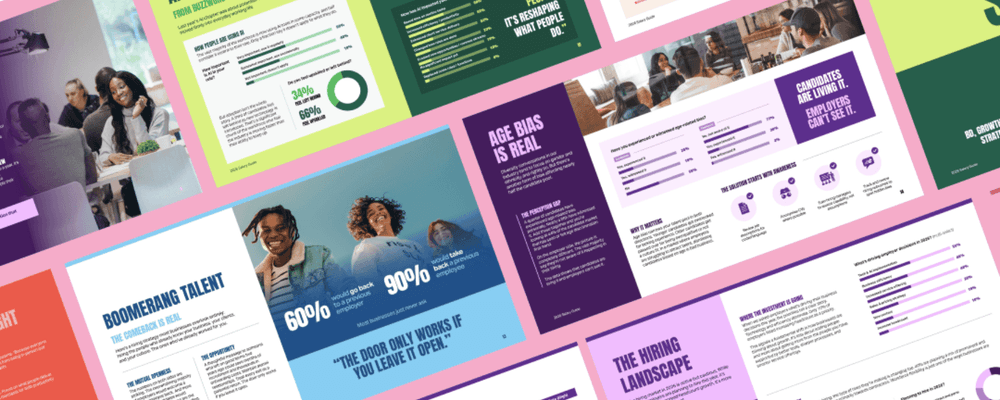
In DNA Recruit's 2026 Salary Guide whitepaper, 90% of candidates say they use AI tools at work. Half say AI is very important in their role and use it regularly, while 40% use it occasionally. At first glance, that sounds like adoption is sorted. It is not. A third of candidates say they feel left behind as new technology is introduced.
That is the bit employers need to sit with. AI is being used, but confidence is patchy.
Usage does not mean confidence
A high usage figure can hide a lot.
Someone who uses AI to cut two hours of admin from their week and someone who occasionally opens a tool, types a vague prompt, gets a poor answer and gives up would both count as users. Their experience could not be more different.
That is why access alone tells part of the story. A team may all have the same platform, but that does not mean they are using it in the same way, or to the same standard.
Hiring managers, agency leaders and internal talent teams should be asking more practical questions:
- Where is AI saving people time?
- Which tasks are people using it for?
- Who feels confident using it?
- Who is worried about accuracy, privacy or quality?
- Which outputs still need heavy rewriting or checking?
Those answers tell you far more than whether the business has "rolled out AI".
In many teams, adoption is already happening informally. People are summarising calls, drafting documents, pulling themes from notes, building rough reports and finding shortcuts. That can be useful. It can also create risk if there are no shared rules.
When everyone works to their own standard, quality becomes uneven. Managers spend more time checking. Confident users move faster, and less confident people fall further behind.
Buying the tool is the easy part
A lot of AI rollouts still look too much like software rollouts.
A tool is chosen. Access is granted. A few links are shared. Someone runs a demo. Then the business assumes people will start using it well.
Some will. Many will not.
The harder part is helping people build judgement around the tool. What is AI good for? What should it never be used for? What information should stay out of it? When does an output need to be checked? Who signs off AI-assisted work before it reaches a client, candidate or customer?
Without proper support, a familiar pattern starts to show up:
- Early adopters race ahead.
- Less confident employees stay quiet.
- Outputs vary from helpful to unusable.
- Managers become the quality-control safety net.
- People worry the tool is being introduced to replace them.
Even when replacement is not the plan, poor communication can make people fear the worst. If AI arrives with no explanation, no training and no clear link to how it will help the team, people will fill in the gaps themselves.
Usually, they fill them with anxiety.
The role replacement story is too narrow
There is a lot of noise around AI replacing jobs. Some of it is fair. Some of it is inflated. Most of it is not that helpful for leaders trying to make good decisions right now.
The employer data in DNA Recruit's 2026 Salary Guide gives a more grounded view. 80% of employers say AI has not replaced any roles in their business. Only 6% say it has replaced some roles or functions. Employers are far more likely to report time savings, productivity gains and better client delivery than job cuts.
That does not mean AI has no effect on roles. It clearly does. But the immediate shift is more about how work gets done.
AI can reduce repetitive admin. It can speed up research. It can draft a starting point. It can summarise messy information and help teams get to a usable structure faster. Used well, it gives people time back for the work that still needs judgement, context and commercial thinking.
That is the opportunity. But it only becomes real if people are trained properly. Otherwise the business gets faster output that still needs to be rewritten, corrected or unpicked.
Speed is useful. Speed without judgement is expensive.
Start where the friction already is
The temptation with AI is to make it grand. Transformation plans. New operating models. Big promises about productivity.
For most teams, a better place to start is the work that already irritates people.
Look for tasks that are repetitive, slow or admin-heavy, but still need a person to steer them. That might include:
- First draft research.
- Meeting summaries.
- Interview question prompts.
- Role profile drafting.
- Reporting templates.
- Survey response themes.
- Reformatting content for different channels.
- Follow-up notes and action lists.
These use cases build trust because people can feel the benefit quickly. They do not have to buy into a grand vision. They can see that a task that used to take an hour now takes twenty minutes, and the final version is still theirs.
A useful question for managers is:
"What work does your team repeat every week that still needs a human, but does not need to start from scratch?"
That is often where the first good AI habits sit.
Faster work still needs human judgement
AI can make work faster, but it should not be treated as the final decision-maker.
This is especially true in hiring, marketing, creative, tech and client-facing work, where context matters. A tool can summarise an interview, but a person still needs to know what was important. It can draft a role profile, but someone still needs to check whether the brief reflects the real job. It can suggest interview questions, but someone still needs to think about fairness, relevance and bias.
Human oversight is not a barrier to AI adoption. It is what makes AI adoption safe.
Every business using AI needs a simple view on:
- What AI can be used for.
- What AI should not be used for.
- What information must stay confidential.
- Which outputs need checking.
- How facts should be verified.
- Who owns the final decision.
- How bias or quality issues should be flagged.
This does not need to be a 40-page policy that nobody opens after the first week. In many businesses, a one-page working guide is more useful.
The principle can be simple:
"Use AI to support the work, not to remove your responsibility for it."
That line sets the right expectation. AI can draft, structure, summarise and suggest. The person using it still owns the thinking, the quality and the final output.
Do not leave people to catch up alone
AI adoption will look different in every business, but the employers who handle it well tend to do four things.
First, audit how your team is already using AI. Ask what tools they use, what tasks they use them for, where AI saves time and where they still feel unsure.
Second, train around real work. For a talent team, that might mean writing a candidate update, building interview questions from a brief, or summarising feedback after a first stage. People learn faster when the example looks like their actual job.
Third, set simple rules of use. Employees should not have to guess what is allowed. Set basic guidance on confidentiality, client information, candidate data, factual checks, tone, bias and sign-off.
Fourth, give people time to practise. AI confidence does not come from one training session. It comes from repeated use. A short monthly session where people share one useful AI workflow can do more than another long policy document.
AI is already inside the working day. Pretending it is still a future issue only makes the gap wider between those who are confident and those who are quietly struggling.
The employers who get the most from AI will not necessarily be the ones with the biggest tech stack. They will be the ones that help people use it well, start with practical efficiency gains, and keep human judgement in the process.
A third of candidates feeling left behind is not a reason to slow everything down. It is a reason to support people properly.
For more insight into how employees and employers are approaching AI, progression, pay and retention in 2026, download the DNA Recruit 2026 Salary Guide whitepaper.
SHARE