The silent killer of your hiring process
Why slow communication is costing hiring teams strong candidates, and how to fix it before the best people disappear.
Hiring managers and internal talent teams usually know when the obvious parts of a process need attention. A salary band feels light. A brief is too vague. A job title is not quite right. An interview panel is too big, or the first stage is asking too much too early.
Those things matter, but they are not always what makes candidates lose interest first.
More often, the damage starts with silence.
Slow communication, patchy feedback and unclear next steps can make a good opportunity feel risky. From the employer side, the delay may be perfectly reasonable. Someone is travelling. A stakeholder has not replied. The team needs one more conversation. The budget is almost signed off.
Candidates do not see any of that. They see the gap between the last conversation and the next update, and they start to draw their own conclusions.
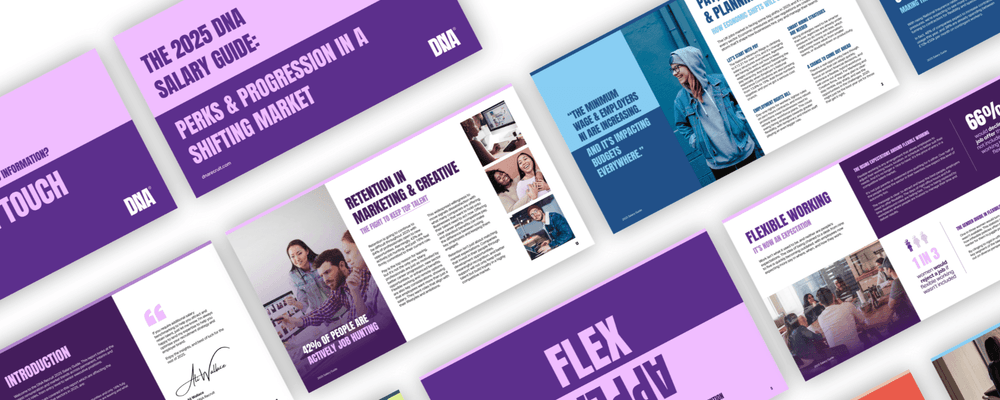
In DNA Recruit's 2026 Salary Guide whitepaper, 74% of candidates said slow communication or a lack of updates was a red flag in a hiring process. It was the most common concern, ahead of shifting job requirements, disorganised interviews, poor interviewers and long processes.
Silence does not feel neutral to a candidate. It feels like uncertainty.
Silence changes how candidates read the opportunity
A hiring process is not only a way for you to assess candidates. It is also the first proper look candidates get at how your business behaves when something matters.
Every touchpoint says something. The speed of your replies, the clarity of the brief, the way interviews are handled and the quality of feedback all become evidence. Candidates use that evidence to decide whether the company is organised, respectful and serious about hiring.
When communication is clear, candidates feel kept in the loop. When it drops off, they rarely assume everyone is busy and doing their best behind the scenes. They are more likely to wonder whether the role has stalled, whether the hiring manager is unsure, or whether they are not the preferred choice.
That is when momentum starts to slip.
Strong candidates are often in more than one conversation. If your process goes quiet while another employer is keeping them warm, the other opportunity starts to feel safer. Not necessarily better, just clearer. And clear often wins.
To a candidate, a lack of communication can suggest:
- the role is not a priority
- the team is not aligned on what it needs
- the business is slow to make decisions
- feedback may not be valued internally
- the working culture may be just as unclear as the hiring process
None of those assumptions may be true. The problem is that silence gives candidates space to believe they might be.
The timeline mismatch is where trust breaks
The whitepaper also shows a clear mismatch between the pace candidates expect and the pace employers are delivering.
Most candidates want the process wrapped up within four weeks. In fact, 76% said that was their preferred window. On the employer side, only 30% said they manage to complete hiring within that time. Most processes are taking four to six weeks.
This is not an argument for rushing important decisions. Hiring well takes thought, especially for senior, specialist or client-facing roles where the wrong hire can create real cost later. But there is a difference between a considered process and a drifting one.
A six-week process can still feel professional if the candidate knows the stages, understands the timings and hears from someone regularly. A three-week process can feel poor if the communication is inconsistent.
The issue is not time on its own. It is time plus silence.
A slow process with updates feels managed. A slow process without updates feels careless.
This matters even more in a market where many professionals are open to a move. The 2026 Salary Guide whitepaper reports that 90% of professionals are either actively looking, casually browsing or open to the right opportunity. That does not mean every candidate is desperate to leave, but it does mean they are listening.
If a competitor moves faster, gives clearer feedback and makes the candidate feel wanted, you may lose before you have made a formal decision.
Why hiring processes go quiet
Most hiring teams do not set out to leave candidates hanging. The silence usually comes from small process gaps that were never fixed before the role went live.
Sometimes the hiring manager wants to see a wider shortlist before giving feedback. Sometimes interviewers have different views of what the role needs. Sometimes the person with final sign-off is brought in too late. In other cases, no one has agreed who is responsible for updating the candidate, so everyone assumes someone else has done it.
These are ordinary problems, but they are not harmless. They slow the process, create extra work for recruiters and make candidates feel like they are being managed badly.
The most common causes tend to be:
- too many interview stages for the level of role
- unclear ownership of candidate communication
- slow CV feedback from hiring managers
- decision-makers joining the process late
- briefs changing after candidates have already been approached
- offer approval being treated as a final admin step rather than part of the plan
The fix is not to put pressure on everyone to move faster at all costs. The fix is to design a process that makes speed easier and silence less likely.
The cost is bigger than one lost candidate
When a candidate drops out, it is easy to treat it as a one-off. They had another offer. The timing was not right. They were never fully committed.
Sometimes that is true. But if candidates keep cooling off, declining second stages or disappearing after interview, the process deserves a closer look.
Poor communication creates commercial drag. It extends time to hire, weakens shortlists and leaves teams under-resourced for longer. It also gives recruiters more work to do because they have to re-engage candidates who were warm a week ago and are now unsure.
There is also the reputation piece, which is harder to measure but easy to feel in the market. Candidates talk to peers, recruiters and former colleagues. A slow, vague process can follow a business long after the role is filled.
That is why candidate communication should not be treated as admin. It is part of the offer you are making before the offer exists.
The hiring process is often the first proof point of your employer brand.
Four ways to tighten the process and secure top talent faster
The good news is that this is fixable. Most teams do not need a complete overhaul. They need clearer ownership, cleaner timelines and a more disciplined approach to updates.
1. Agree the process before the role goes live
Before the search starts, agree how the process will work. Decide how many stages are genuinely needed, who should be involved, when interviews can happen and who has final sign-off.
This sounds basic, but many delays are created because these decisions happen after candidates are already in play. By then, every internal wobble becomes an external delay.
At minimum, agree:
- the number of interview stage
- the people involved at each stage
- the feedback deadline after each interview
- the decision-maker for offer approval
- the target date for completion
2. Send updates even when the answer is not ready
Candidates do not expect instant decisions every time. They do expect to know where they stand.
A short holding message can protect trust while the business gets aligned. It might be as simple as: "We are still gathering feedback from the final interviewer, but you are very much still in the process. I will come back to you by Thursday."
That kind of message takes less than a minute. It also stops the candidate assuming the worst.
3. Give feedback within 48 hours
Feedback does not need to be long, but it should be prompt and useful. A candidate who has taken time to prepare, attend an interview and think seriously about your business deserves a clear response.
A 48-hour feedback rule is a sensible standard. If the decision is not ready, send an update anyway. Silence after interview is one of the quickest ways to undo goodwill.
4. Give decision-makers the authority to move
Speed improves when the right people are involved at the right time. If every decision needs another conversation, another stakeholder and another week of diary coordination, the process is too fragile.
Agree who gives input, who makes the final call and who simply needs to be informed. For senior or business-critical roles, this matters even more. Candidates can tell when a business is confident in its own process.
The businesses that communicate well will win more often
Better communication does not mean rushing a hire. It means respecting the candidate's time, protecting momentum and making the process feel as organised as the business wants to appear.
The 2026 Salary Guide whitepaper makes one thing clear: candidates are paying attention to more than salary. They are looking at progression, flexibility, leadership, culture and the way a company behaves before they join.
If the hiring process is slow and silent, it weakens the rest of the story.
Download the DNA Recruit 2026 Salary Guide whitepaper for the full findings on hiring timelines, candidate expectations, pay, progression and retention in 2026.
SHARE